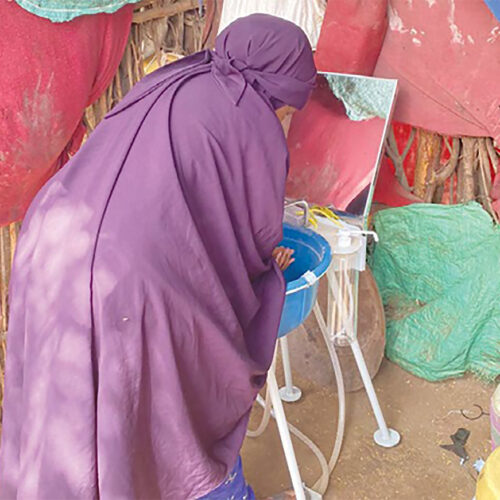
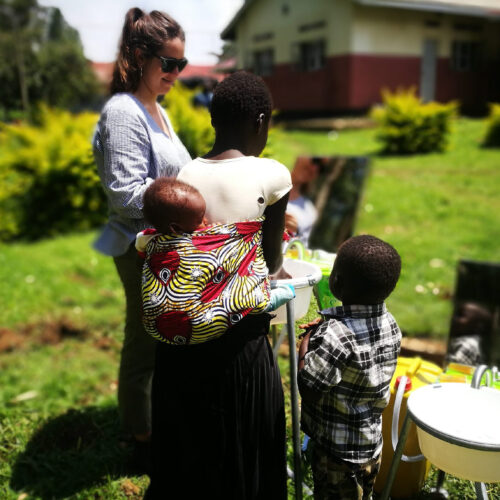
Our world population has reached 8.3 billion and continues to grow. As events like famine, floods, earthquakes, and war become more frequent, more people are being displaced around the world.
Humanitarian emergencies caused by conflict, natural disasters, and food crises often force people to leave their homes. Many of those displaced end up living in temporary camps, informal settlements, or vulnerable host communities.
One of the major challenges faced by both displaced people and the organisations supporting them is poor water, sanitation, and hygiene (WASH) conditions. Ineffective WASH systems increase the risk of illness and death from infectious diseases such as diarrhoea and cholera.
Improved hygiene behaviours, especially handwashing with soap, have been shown to significantly reduce cases of diarrhoea. Research also shows that one of the strongest factors influencing handwashing is access to a well-designed, appealing, and conveniently located handwashing facility with soap and water.
In 2018, the British Red Cross and Arup, working with experts from the London School of Hygiene and Tropical Medicine (LSHTM), began developing effective and desirable handwashing units that could be deployed by Red Cross and Red Crescent Societies. The goal was to support emergency response efforts by providing facilities that help prevent the spread of potentially life-threatening infections through proper handwashing, particularly before eating and after using latrines.
Development Process
The team successfully secured staged funding from Arup’s Community Engagement programme. This support allowed Arup’s technical specialists to collaborate with the British Red Cross and the London School of Hygiene and Tropical Medicine (LSHTM) to tackle the challenge together.
As the product designer on the project team, it was essential to fully understand the problem, the expectations of each organisation, and the realities of current procurement and deployment practices.
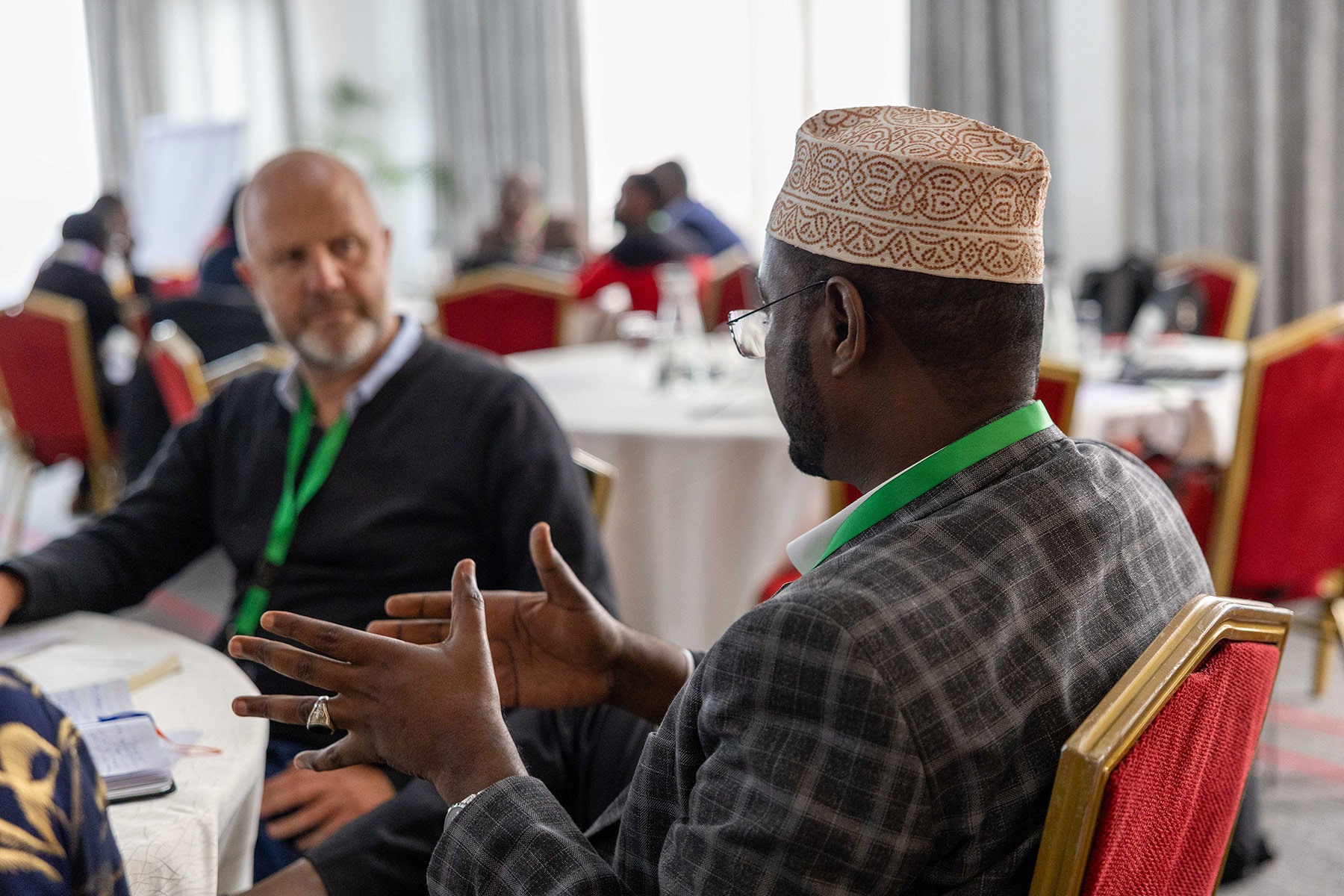
The technical requirements for the handwashing unit were extensive. The system needed to deliver a touchless, on-demand flow of water—just enough for effective handwashing—while being easy to refill. It also had to be robust and secure, using durable materials such as sheet metal instead of glass for the mirror. Additional requirements included stability, options for bar or liquid soap, and a range of other practical features.
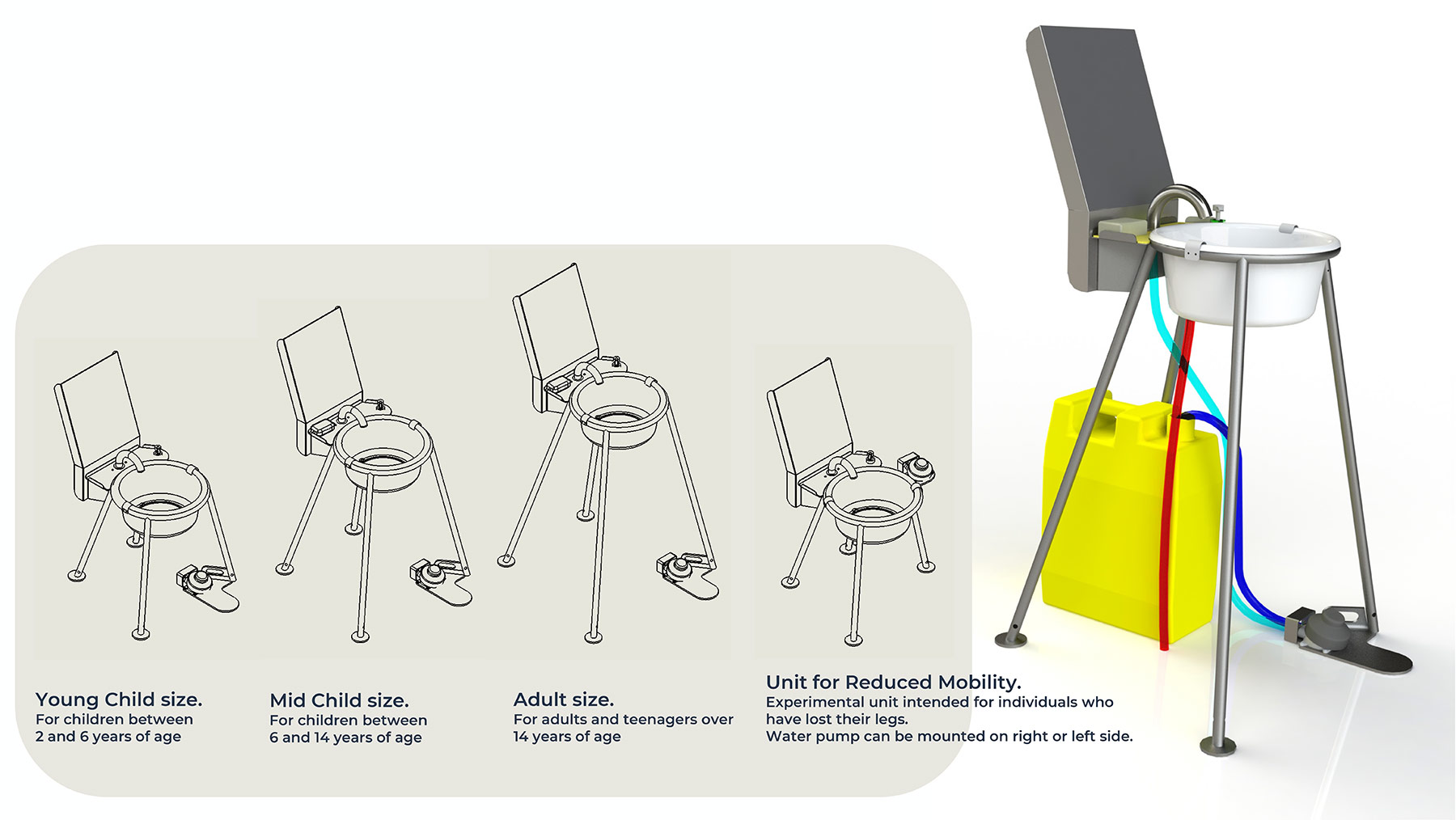
We also considered product familiarity, which is crucial when developing new equipment. Feedback showed that people around the world tend to associate a basin, a faucet, and soap—often accompanied by their reflection in a mirror—as the universal setup for handwashing. To encourage acceptance and ease of use, the design of the handwashing unit reflected this familiar arrangement, avoiding any unfamiliar layout that might discourage use.
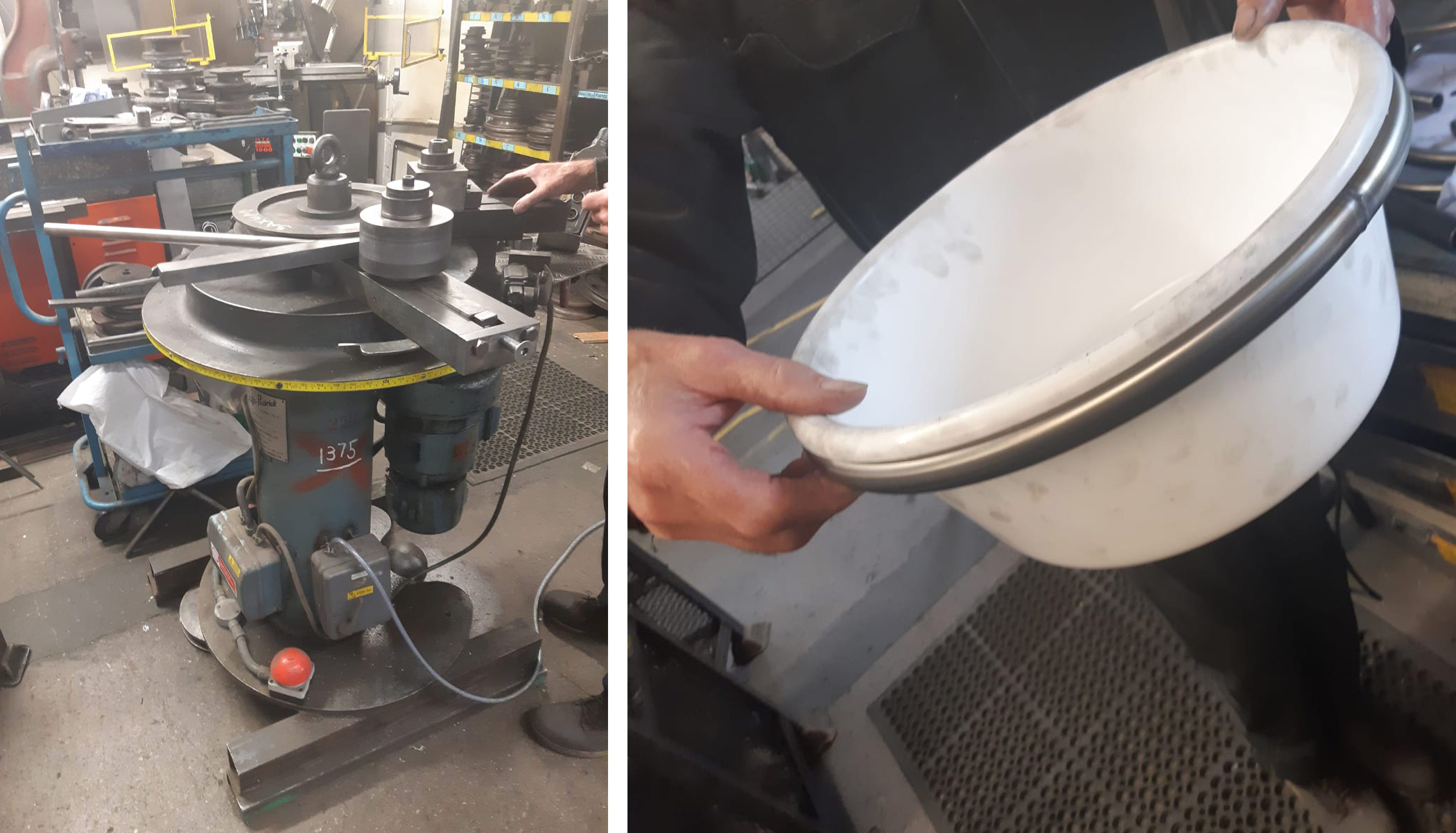
The British Red Cross also requested a design that could be produced locally, where needed, in line with their evolving procurement and supply chain strategies. To support this, we avoided high-cost tooling and manufacturing methods such as injection-moulded plastics. Instead, we focused on globally available fabrication techniques using steel components. This approach enabled the unit to be manufactured across all continents, using fabricated steel legs and connectors, a stainless-steel mirror, a durable rubber foot pump to control water flow, and a stackable basin for handwashing.
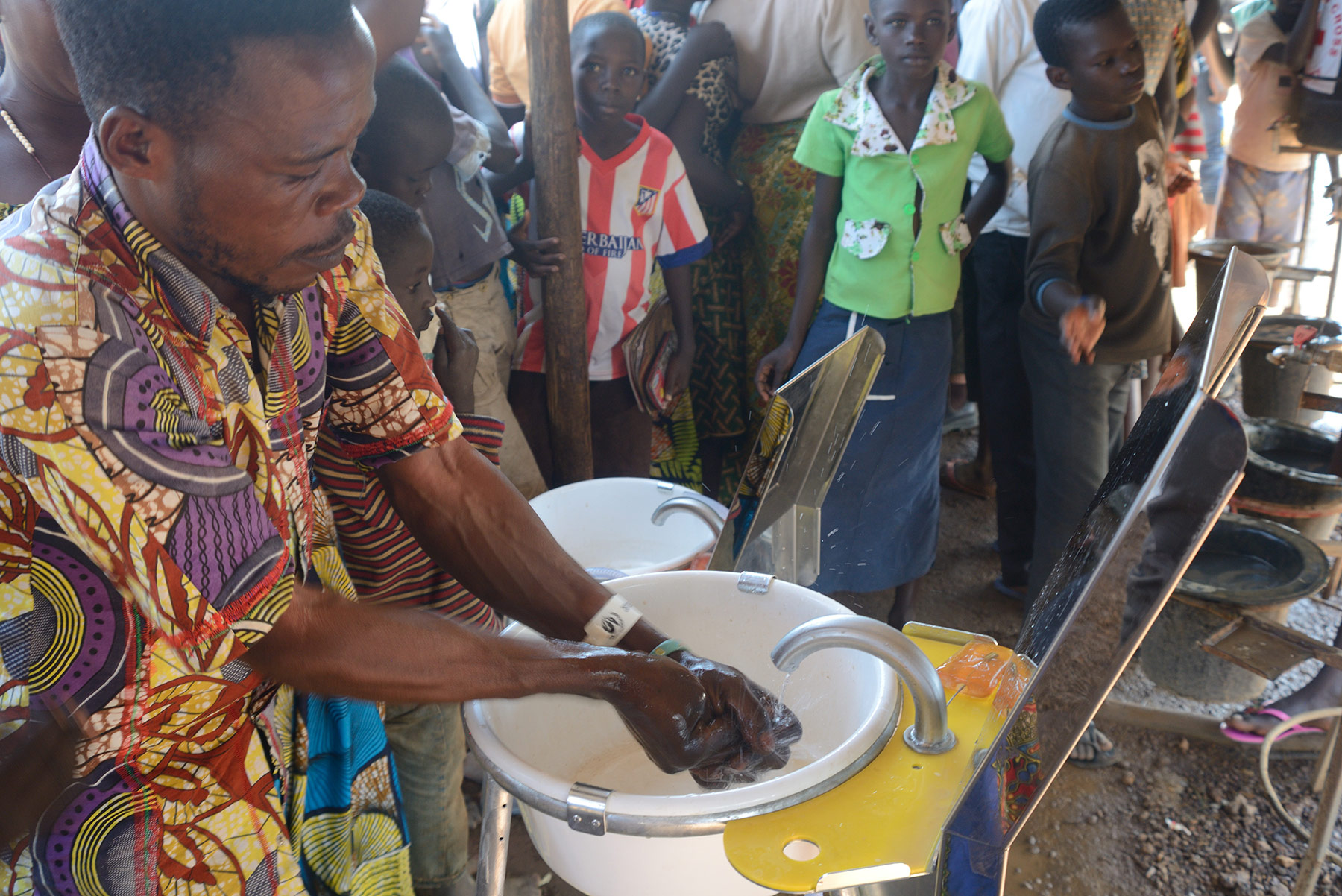
Over the past eight years, we have trialled small-batch production of the units with several different fabricators in the UK, Kenya, and Bangladesh. Ideally, each continent should have no more than one to three fabricators. This allows strong, long-term relationships to form between purchasers and manufacturers, enabling the product and its production processes to improve over time. Constantly starting production with new suppliers in multiple countries is inefficient and offers little benefit in terms of resources, supplier investment, or continuity.
Understandably, handwashing units used in humanitarian emergencies tend to be low-cost. The downside to that is they are often prone to a lack of robustness and could be much more user friendly and effective. When compared to a traditional wash basin setup with a ceramic basin, taps, a plumbed water supply, and a mirror, the Jengu unit—when correctly specified—represents value for money. Whilst naturally more expensive than very basic products, a Jengu unit manufactured by a known, reliable fabricator to the correct specifications is a worthwhile investment. For NGOs aiming to address this critical WASH challenge, it represents a cost-effective and impactful solution.
Jengu specifications for Emergency Response
Critical learnings from the eight-year Jengu development, procurement, manufacture and testing process are as follows:
- The fabricated steel frames can be made in several continents with some variations. Different methods of corrosion protection are used, from Stainless steel in Europe and South Africa to powder coated steel in Kenya and Bangladesh.
- Costs vary in each region which reflect different labour and overhead costs of those regions. It is recognised that purchasing the units and specialist parts directly from the manufacturer provides substantial cost saving compared to purchasing through importers and agents.
- Several basins were tested in a range of environments. The centrally sourced ‘Lucy’ polypropylene basin or for harsh environments, the centrally sourced stainless-steel basin is recommended. Locally sourced basins are not recommended due to potential durability issues and lack of information on the materials used.
- It is important to understand the project requirements and environment and then select which basin will be used.
- The pumps and basins can be procured through several suppliers and agents. We are able to provide advice.
Overall, research organisations have concluded that Jengu is an effective handwashing solution for humanitarian emergency response provided the correct specifications and procurement process are followed. There unit design is available in four sizes including a version for people of reduced mobility.
Recommendations
The Jengu handwashing unit has demonstrated that effective, desirable, and context-appropriate hygiene infrastructure can be delivered at a reasonable cost and manufactured reliably across multiple regions. Its open-source design directly supports improved hygiene practices, reduces disease transmission, and enhances the dignity and wellbeing of people affected by humanitarian emergencies.
To maximise its impact, we strongly recommend that humanitarian organisations continue to participate in the development of more effective handwashing equipment like Jengu and include the Jengu handwashing unit, along with other effective solutions, in their standard emergency response equipment catalogues and future development efforts.
By doing so, agencies can ensure rapid, consistent access to high-quality handwashing facilities during crises, strengthening WASH interventions and improving health outcomes for displaced communities.